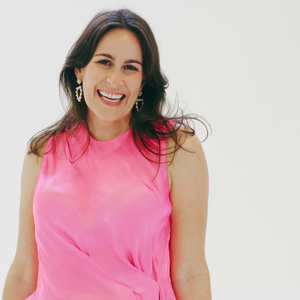
Ten Years as a Corporate Lawyer in Tech Gave Me a Radar I Can’t Switch Off
A strange thing keeps happening to me in conversations lately.
Over the past week, across completely unrelated contexts, the same name has surfaced multiple times. Someone mentions it in passing at a conference, another person says that I just have to try it, a founder drops it into a Circle thread and a respected developer references it over cocktails.
When something shows up three or four times in quick succession from different directions, I pay attention. That pattern recognition is a habit I cannot shake from my corporate life.
When you spend a decade inside the B2B tech industry, you develop a radar for when a technology wave is forming. You start to see the early signals before the broader market catches up.
This time, the name is OpenClaw and the signal is agentic AI.
What agentic AI actually is and why the distinction matters
For the past year or so most people have been interacting with AI through chat interfaces. You ask a question, the model responds and the interaction ends there. Useful, genuinely but ultimately still reactive. Agentic AI operates on a different logic entirely.
Instead of answering questions, an agentic system plans tasks, executes them, evaluates the results and continues working until the objective is complete.
It behaves less like a search engine and more like a junior employee who can hold a brief and run with it. For small business owners, that distinction is not academic.
The moment AI can execute tasks across tools, files and systems, it stops being a writing assistant and starts being a workflow engine. For anyone building a new business in 2026 like myself, that changes the calculation significantly.
The strange position I am building from
What makes this moment particularly interesting for me is the vantage point I occupy. For more than a decade I worked inside technology companies and watched waves of disruption roll through the industry. Cloud computing. SaaS. NaaS. Marketplaces. Platform ecosystems.
Every wave triggered the same internal tension: genuine excitement from some people and existential panic from others as well as a corporate boardroom trying to figure out how quickly to move.
Now that I am on the outside, building my own thing, and the same type of technological disruption I once observed from inside large organisations is sitting directly on my desk.
The difference is that this time I get to decide how quickly I adopt it, without committee approval, a seventeen-step procurement process or the inevitable “it’s with legal”.
My background gives me enough context to recognise what is happening.
Approaching it as a small business owner rather than a corporate cog changes what I do about it.
When you run a new business, the upside of adopting new technology is leverage but the downside is risk. Both things can exist at the same time and anyone who tells you otherwise is either very optimistic or selling something.
Two tools, two different philosophies: Claude Cowork vs OpenClaw
Claude Cowork is Anthropic’s approach to agentic AI, built inside the Claude ecosystem and extending the model beyond chat into actual task execution.
Instead of answering questions, the system can plan and run multi-step workflows, read files, analyse data, generate documents and orchestrate tasks across tools.
Technically it functions as a controlled agent environment: the model reasons through the task, the system provides a set of approved tools and the AI executes within those boundaries.
The design philosophy is essentially safe productivity, built for professionals who want the benefits of AI automation without exposing their operations to chaos. For someone who already uses Claude heavily, the experience feels like a natural extension of existing tools rather than a foreign system to onboard.
OpenClaw sits at the opposite end of the spectrum. It is an open source agent framework built for maximum flexibility. You can run it locally, connect it to different models and give it access to system commands, APIs and external services.
Rather than operating inside a curated environment, OpenClaw functions more like a programmable AI agent: you build skills, extend functionality and connect it to whatever tools you need. From a technical perspective it is considerably more powerful. From a risk perspective, it is also considerably more unpredictable - by design.
When I tried to explain the difference to a non-technical friend recently, the clearest analogy I could find was from the music world.
To me, Claude Cowork would sound like a polished studio production: professional, controlled, clean output. Whereas OpenClaw is more like punk rock band rehearsing in a warehouse: loud, experimental, occasionally brilliant and occasionally chaotic.
Both have a place in the ecosystem.
One is designed for stability and the other is designed for exploration. Which one you reach for depends entirely on what problem you are trying to solve and how much operational risk you can absorb while you are solving it.
Where I am actually landing on this
As a new business owner in 2026, I cannot afford to ignore agentic AI.
Content workflows, research, data analysis, automation and administrative tasks are all areas where the leverage is real. The productivity upside for a solo founder or a small team is not marginal, it is structural.
However, I also cannot completely abandon the instincts that come from spending years inside the technology industry as a corporate lawyer.
Due diligence does not disappear just because the tools are exciting.
Security risks exist, automation mistakes happen and systems that behave well in a demo do not always behave well in production.
The real challenge is finding the balance between experimentation and measured adoption, moving quickly but not recklessly, which probably frustrates some people in the pure-hacker end of the AI community, but it is also the reason many small businesses survive long enough to actually scale.
For now, Claude Cowork will likely become part of my daily workflow because it fits the way I already work and provides agent functionality without introducing unnecessary operational risk.
OpenClaw is still genuinely fascinating and I will keep exploring it but I will approach it as an experiment rather than infrastructure for the foreseeable future. I’m just not skilled enough to implement it well, yet.
The bigger picture
Stepping back from the specific tools, something structurally significant is happening.
We, mainstream users, are watching the first wobbly steps of a new category of software: AI agents, not chatbots or assistants, but autonomous systems that can plan and execute work across multiple steps and multiple tools.
If you run a small business, please pay attention, because the moment software can reliably perform multi-step tasks across your systems, the economics of operating your company change fundamentally.
A single founder can do more, a small team can operate at a scale that once required significantly more headcount and the playing field moves.
The people who experiment early will learn faster than the people who wait. Which means the research phase eventually has to end.
At some point you stop reading about the wave and you start figuring out whether to paddle or get out of the water.
For me, that moment is arriving right now.
What a time to be building something new.
LFG.
💖
Mel Storey is the founder of Counsel Media and host of the Counsel Podcast. She regularly writes the Big Sis Briefing on careers, modern leadership and the realities of building a business in public.
Follow her on Instagram @careerbigsis for more.